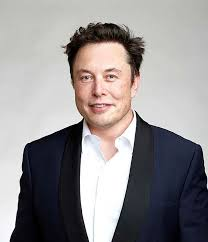
Tech billionaire Elon Musk has officially become the world’s first trillionaire, with his net worth expected to exceed $1.1 trillion following the opening of trading on Friday, June 12.
The 54-year-old entrepreneur, whose vast business empire has earned the nickname “Muskonomy,” has become one of the most influential figures in technology and internet culture. Musk’s fortune is largely driven by his stake in SpaceX, which is estimated to be worth around $866 billion, alongside his holdings in Tesla and several other ventures.
Beyond Tesla and SpaceX, Musk has co-founded brain-chip company Neuralink and tunneling startup The Boring Company. In 2022, he acquired Twitter for $44 billion, later rebranding the platform as X while promoting it as a hub for free speech.
The father of 14 also briefly played a role in politics after supporting President Donald Trump’s election campaign. He was appointed to lead the Department of Government Efficiency but later stepped down following disagreements over Trump’s budget bill. Their public feud played out on X amid declining Tesla sales and consumer boycotts of the electric vehicle company.
Despite the setbacks, Musk’s wealth has continued to soar. Matt Durot, deputy editor at Forbes Wealth, noted the massive gap between Musk and other billionaires.
“The second-richest person has been hovering around $300 billion, less than one-third of what Musk could potentially be worth. Only Oracle founder Larry Ellison has ever crossed the $400 billion mark,” he said.
The scale of Musk’s fortune has sparked renewed discussions about global inequality and philanthropy. According to Oxfam, an estimated $37 billion annually through 2030 could help address extreme and chronic hunger worldwide. In 2021, Musk challenged the United Nations to provide a detailed plan showing how $6 billion could help combat world hunger. The World Food Programme later responded with a proposal aimed at assisting 42 million people across 43 countries, though no donation followed.
Experts have also pointed to other global challenges that could benefit from increased funding. Researchers estimate that an additional $2 billion annually, on top of existing investments, could make malaria eradication achievable by 2050. UNESCO has also projected that approximately £97 billion in additional yearly funding would be required to provide universal access to education.
For now, however, Musk appears focused on expanding his businesses and strengthening his position at the top of the global wealth rankings.
JP Morgan CEO Jamie Dimon praised the billionaire entrepreneur, describing him as “the Edison of our time.”



More Stories
New York Bans AI Use for Students Up to Eighth Grade in Public Schools
Russia Strikes One Of Ukraine’s Largest Stadium
X Ends Creator Revenue-Sharing Programme, Introduces Original Content Rewards